Kitchens, Resolved: Getting It Right
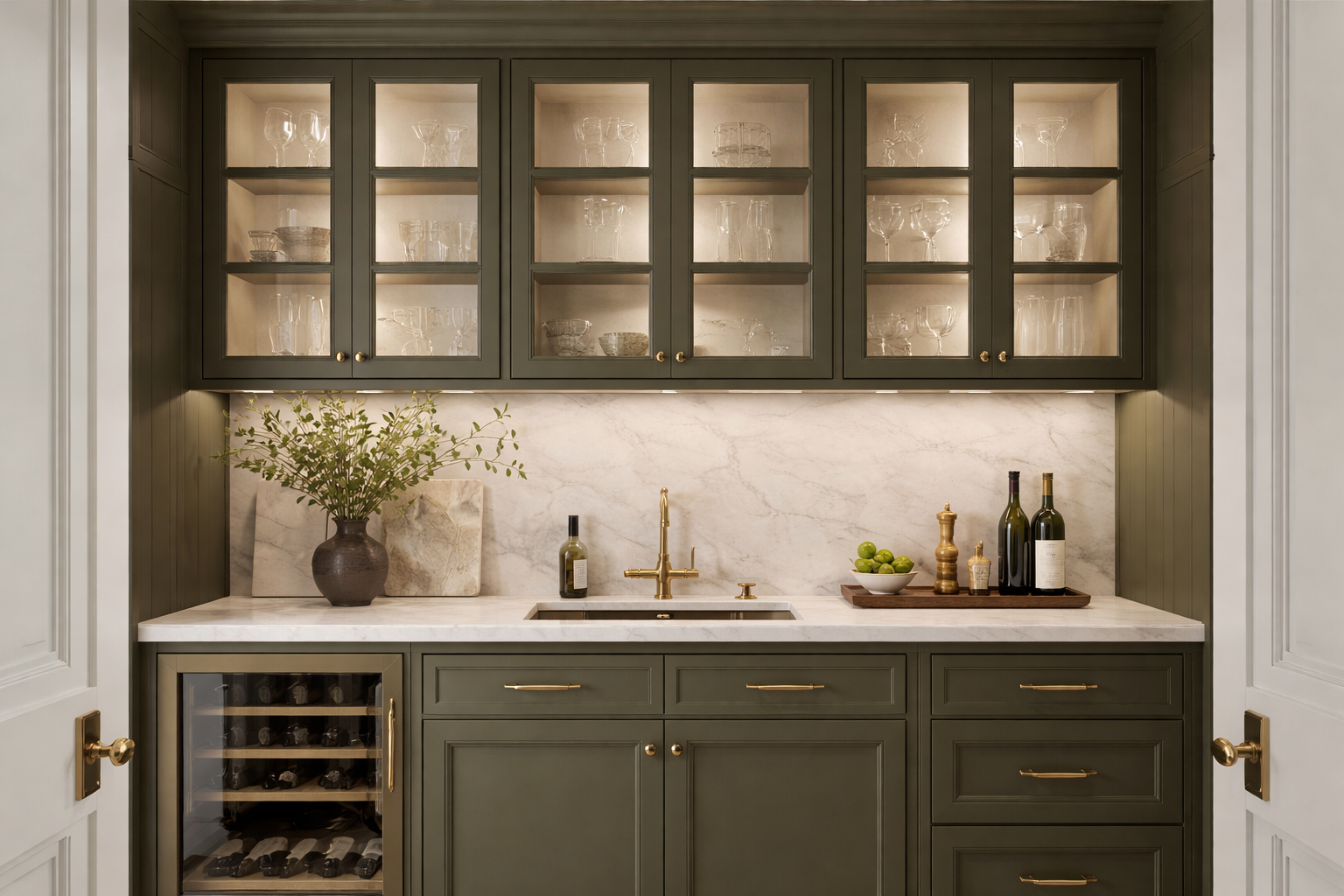
There is a particular kind of disappointment that happens in a kitchen.
Everything is new, everything is expensive, and everything is—on paper—correct. And yet, something remains unsettled. Not obviously wrong, not easy to name, but quietly persistent.
This is where most kitchens fail—not in quality, but in composition.
The modern kitchen is rarely designed as a whole. More often, it is assembled through a sequence of decisions made in isolation: cabinetry selected first, then countertops, then hardware, then backsplash, then lighting. Each element may be individually beautiful, even exceptional. But without a unifying structure, they do not resolve into a coherent room. They remain a collection of parts.
The difference is immediately perceptible. A composed kitchen feels inevitable, as though it could not have been arranged any other way. An assembled one, no matter how costly, carries a subtle tension—each element asking to be noticed, rather than contributing to a larger order.
This is often mistaken for a matter of taste. It is not. It is a matter of framework.
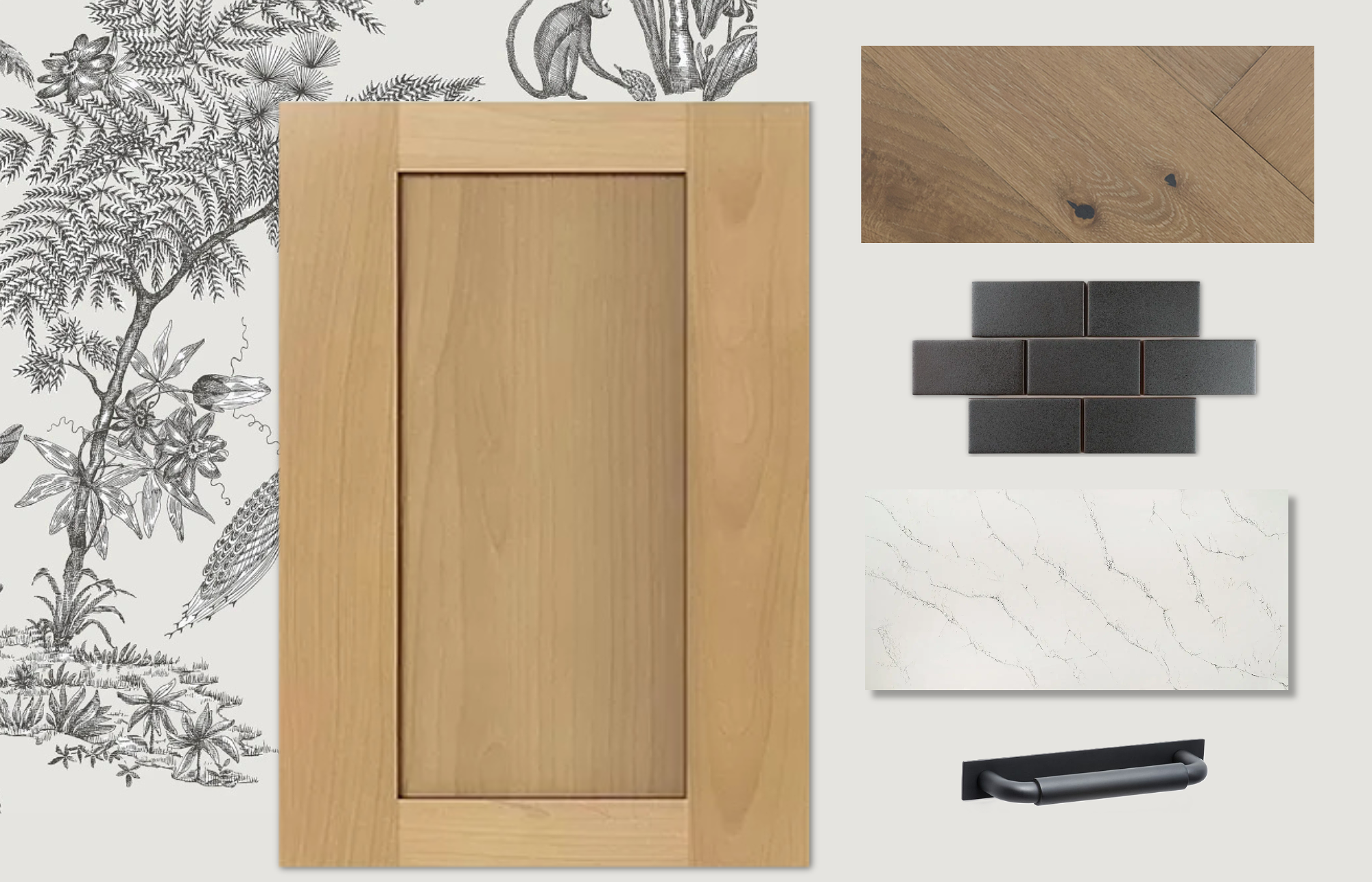
The most successful kitchens do not rely on abundance or variation to create interest. They rely on restraint, proportion, and relationship. Materials are chosen not only for their individual merit, but for how they sit beside one another—how they absorb or reflect light, how they introduce warmth or clarity, how they carry weight within the room. Contrast is used deliberately, never incidentally. Nothing competes, and nothing feels extraneous.
Much contemporary advice encourages the opposite: to layer, to mix, to add interest. While not inherently flawed, this approach is incomplete without structure. A room in which every element seeks attention quickly loses coherence. Richness is not achieved through accumulation, but through alignment.
A black cabinet paired with brass hardware can be compelling. So can a strongly veined stone, or a patterned wall. But without an underlying idea governing their relationship, these elements do not build upon one another. They fragment the room.
A more effective starting point is not material, but intention. Before selecting a single finish, the question should be: what is the governing idea of the kitchen? Not a style in the conventional sense, but a guiding principle—quiet contrast, light and reflection, historic weight, air and openness, depth and shadow. With that in place, each subsequent decision becomes clearer. The process shifts from selecting what appeals to selecting what belongs.
This distinction is subtle but decisive. It transforms the act of designing from one of accumulation to one of composition.
There is a simple test. Remove an element—hardware, lighting, backsplash—and consider whether the room improves. If it does, something was unnecessary. In a resolved kitchen, every component holds its place. Nothing can be taken away without consequence.
This is where many interpretations of luxury fall short. Luxury is often treated as additive: more finishes, more features, more moments of emphasis. Yet the most enduring kitchens operate in the opposite direction. They reduce friction. They eliminate visual noise. They do not insist upon themselves, but instead create a sense of ease.
That ease is what people respond to, even if they cannot immediately articulate it.
Materials play a central role in this. Color may define the palette, but materials define the experience. A matte surface absorbs light differently than a polished one. Stone carries weight and variation; engineered surfaces offer consistency and restraint. Metal introduces temperature and tone. When these qualities are considered in relation to one another, the room begins to settle. When they are not, no palette can fully reconcile the imbalance.
Ultimately, the distinction is this: most kitchens are designed through selection, while the best are designed through composition. Selection asks what is desirable. Composition asks what is necessary.
A resolved kitchen does not draw attention to itself. It does not depend on trend, nor does it require explanation. It feels complete in a deeper sense—considered, balanced, and enduring.
As though it has always been that way.