What Handles Should I Choose?
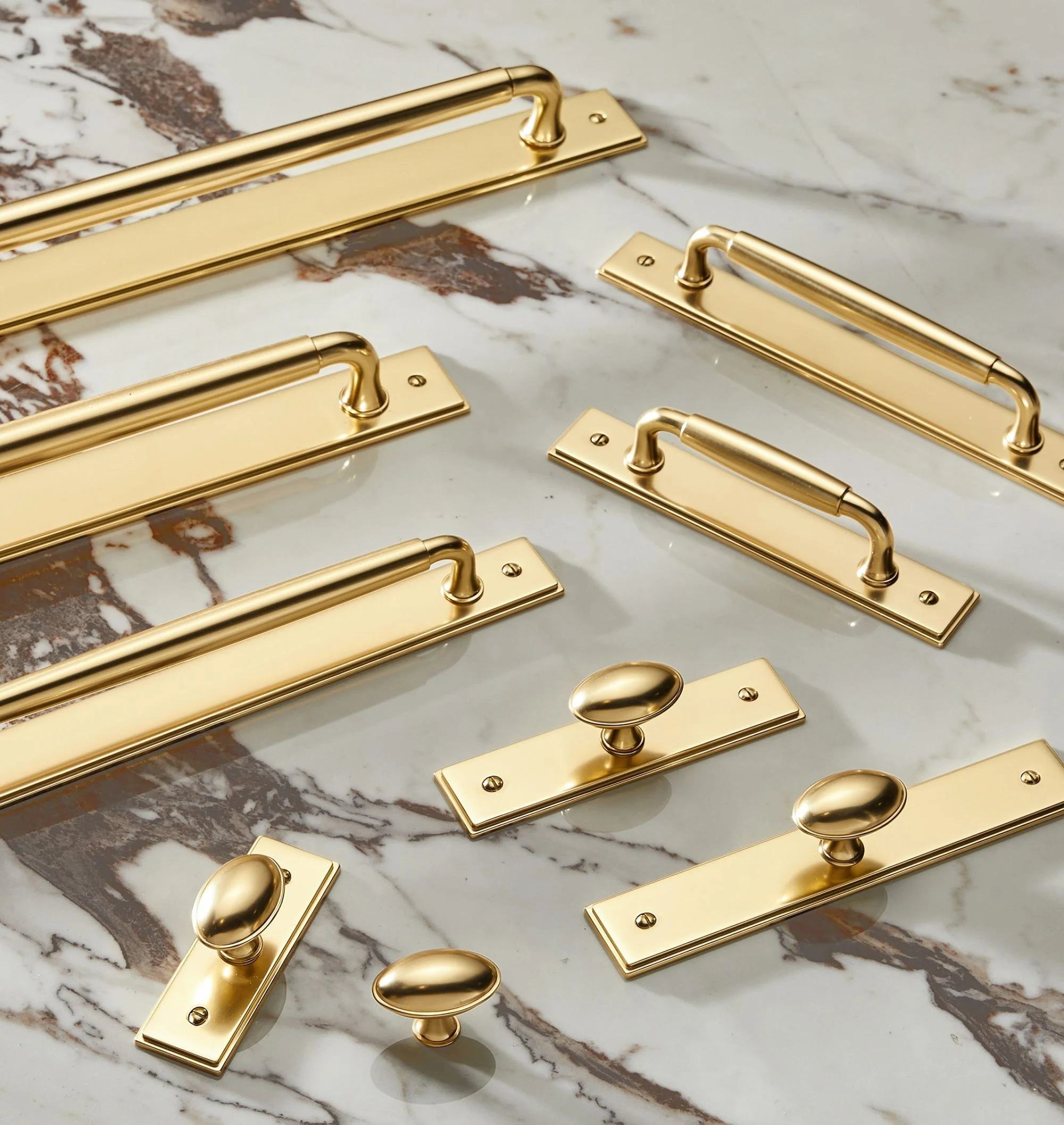
In a well-considered kitchen, nothing is incidental.
It may feel as though cabinetry, worktops, and layout carry the weight of the design—and they do—but it is often the hardware that quietly determines whether a kitchen feels resolved or unresolved.
Knobs and handles are touched more than any other element. They sit at eye level. They catch the light. And yet, they are rarely given the same level of thought as larger decisions.
The truth is, hardware is not a finishing touch.
It is part of the composition.
Begin with the Character of the Kitchen
Before selecting a handle, consider the nature of the room you are creating.
Is it:
architectural and restrained
soft and layered
traditional and detailed
or quietly modern
The hardware should not introduce a new idea.
It should reinforce what is already there.
A pared-back maple kitchen, for example, benefits from simple, well-proportioned pulls in a darkened finish—something that gives structure without decoration.
A more traditional painted kitchen may call for turned knobs or cup handles with a sense of familiarity and weight.
When hardware feels out of place, it is usually because it is trying to say something different from the cabinetry.
Mixing Finishes (And Why It Often Works Better)
There is a tendency to match everything—taps, appliances, handles—so that nothing conflicts. While this can be effective, it can also feel flat.
A more considered approach is to allow finishes to relate, rather than match exactly.
Aged brass beside a softer brushed brass.
Matte black against warmer metals.
Polished elements used sparingly.
The aim is not contrast for its own sake, but layering—a kitchen that feels as though it has been assembled over time rather than specified all at once.
Restraint is important here. Two, perhaps three finishes are usually enough. Beyond that, the room begins to lose clarity.
How Many Styles Should You Use?
Variety brings interest, but too much creates noise.
In most kitchens, a small mix works best:
a handle for drawers
a knob or smaller pull for cupboards
occasionally a latch or catch where appropriate
Each serves a purpose, both visually and practically.
What matters is consistency within each category.
If you choose a particular pull, repeat it.
If you introduce a knob, let it be the same throughout.
The kitchen should feel edited, not assembled from options.
Proportion: The Detail That Changes Everything
One of the most overlooked aspects of hardware is scale.
A handle that is too small can feel apologetic.
Too large, and it dominates unnecessarily.
As a general principle:
Wider drawers benefit from longer pulls or a pair of handles
Standard cupboards suit a single, well-sized knob or pull
Beyond practicality, proportion brings rhythm to the cabinetry.
It creates a sense of order, even when the materials themselves are quiet.
Knobs vs Pulls vs Cup Handles
Each has its place, and the choice is rarely arbitrary.
Knobs
Understated and traditional, knobs are often best for:
cupboard doors
lighter-touch cabinetry
spaces where simplicity is key
They sit quietly and do not interrupt the line of the cabinet.
Pull Handles
More architectural in nature, pulls offer:
ease of use
a stronger visual line
a sense of intention
They work particularly well on:
drawers
integrated appliances
larger cabinetry
In kitchens where clarity and structure matter, pulls are often the anchor.
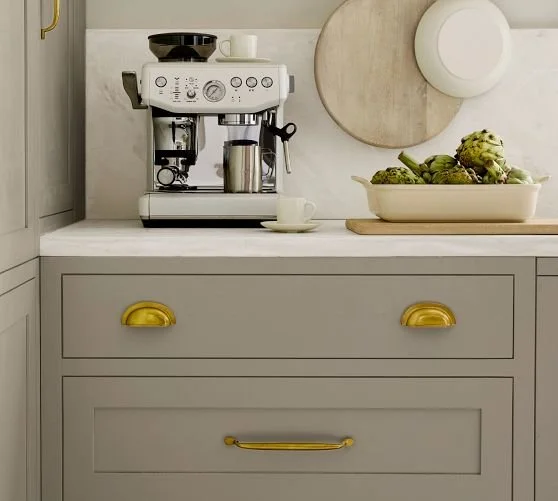
Cup Handles
There is a familiarity to cup handles that suits more classic interiors.
They are best reserved for:
drawers rather than doors
kitchens with a traditional or farmhouse influence
Used sparingly, they can add charm.
Overused, they can feel overly thematic.
Placement Matters More Than You Think
Even the most beautiful handle can feel awkward if poorly positioned.
Knobs should sit comfortably within the frame of the door
Pulls should align consistently across drawers
Symmetry should be considered, but not forced
These are small decisions, but they are what make a kitchen feel composed rather than approximate.
The Role of Cupboard Catches
Often overlooked, catches introduce both function and a sense of occasion.
They are useful in:
high-traffic areas
cupboards that need a firmer close
But beyond practicality, they can elevate a single piece of cabinetry—a pantry, a dresser, a larder—giving it presence.
Used sparingly, a catch becomes a point of interest rather than repetition.
Choosing the Right Size Knob
Knobs in particular require careful scaling.
Smaller knobs suit lighter, more delicate cabinetry
Medium sizes are versatile and quietly functional
Larger knobs introduce emphasis and can feel more contemporary
The decision should relate to the cabinet itself, not the hardware in isolation.
Bringing It All Together
When hardware is chosen well, it is almost invisible—not because it disappears, but because it feels inevitable.
Nothing draws attention to itself.
Nothing feels like an afterthought.
Instead, there is a quiet coherence:
the cabinetry holds its line
the finishes relate to one another
the proportions feel considered
And the kitchen, as a whole, feels settled.
Explore complete kitchen compositions where every detail is resolved →