Small Space, Strong Presence
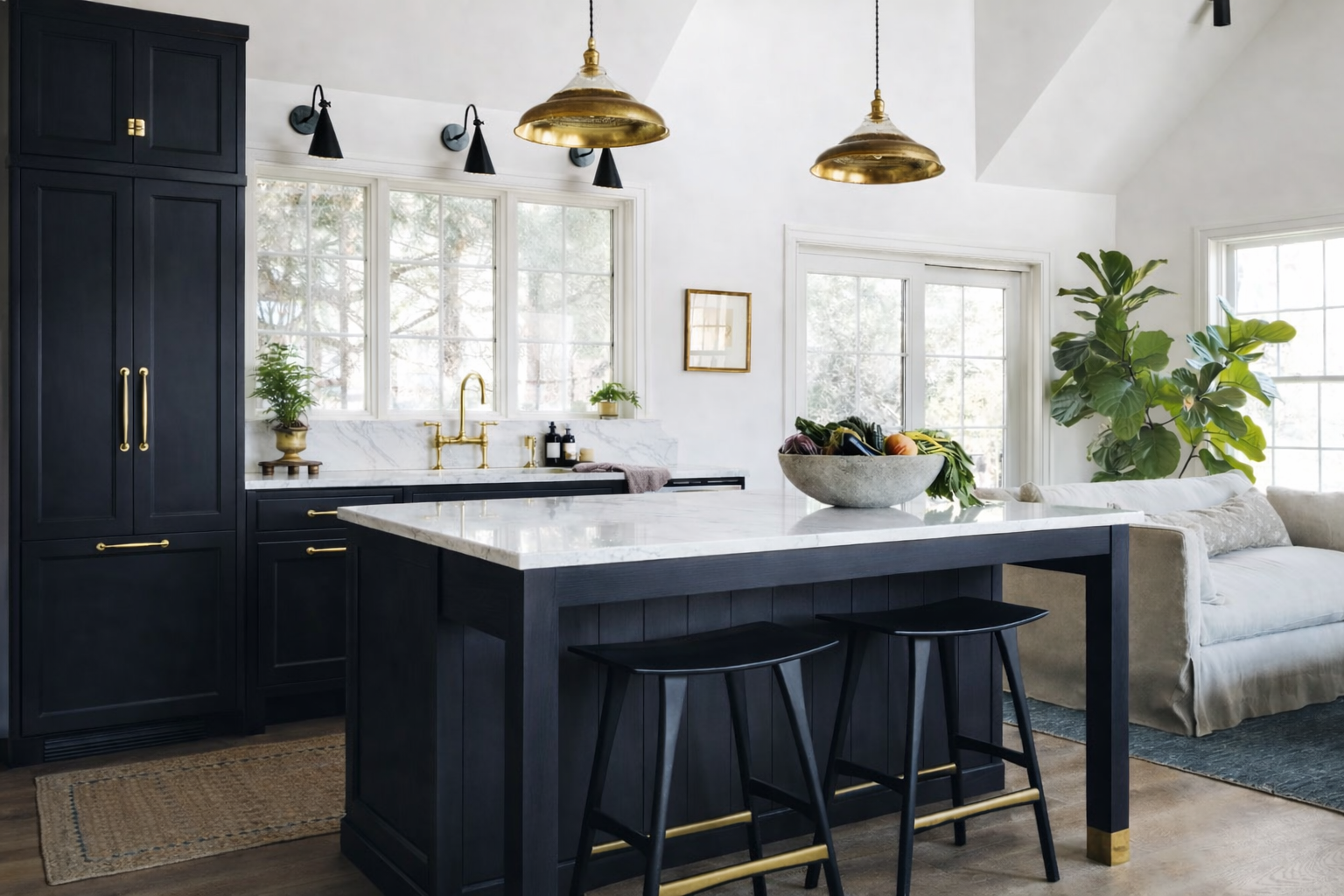
Black in a small kitchen is often misunderstood—mistaken for heavy, enclosing, or impractical. In reality, when handled with precision, it becomes one of the most powerful tools in a designer’s palette. The result is not darkness, but depth. Not confinement, but clarity.
The difference lies entirely in execution.
Start with Structure, Not Color
A successful black kitchen begins long before paint is selected. Proportion, layout, and architectural clarity must lead.
In smaller spaces, cabinetry should feel intentional and grounded—not busy. Clean Shaker profiles, balanced rail widths, and consistent reveals prevent visual noise. Black amplifies form; any imbalance becomes immediately apparent.
This is why restraint matters. Fewer interruptions. Fewer unnecessary details. Let the cabinetry read as a single, composed element rather than a collection of parts.
Contrast Is Non-Negotiable
Black cannot carry a space alone—it needs contrast to breathe.
Introduce lighter surfaces strategically:
Worktops in soft marble or pale stone to reflect light
Walls in warm, muted neutrals rather than stark white
Subtle variation in textures to prevent flatness
The goal is not high contrast for drama, but controlled contrast for balance. When done well, the black recedes slightly, allowing the room to feel more expansive than expected.
Let Light Do the Heavy Lifting
Natural light is the quiet partner of a black kitchen.
Maximize it wherever possible:
Avoid heavy window treatments
Keep sightlines clean and unobstructed
Use reflective finishes—polished stone, aged brass, glazed tile—to catch and move light
Artificial lighting should be layered, not overpowering. Think soft under-cabinet illumination, discreet ceiling fixtures, and warm-toned bulbs that enhance rather than flatten the richness of the cabinetry.
Materiality Matters More Than Color
Not all black is equal.
A flat, lifeless finish will shrink a space. A nuanced, slightly softened black—whether hand-painted, satin, or lightly textured—absorbs light in a more sophisticated way.
Pair it with materials that carry their own quiet character:
Aged or brushed brass for warmth
Natural stone with gentle veining
Timber accents used sparingly for softness
These elements prevent the space from feeling monolithic and instead introduce layers that reveal themselves over time.
Keep the Palette Tight
In a small kitchen, discipline is everything.
Limit the palette to a few well-considered materials and repeat them consistently:
Cabinetry in black
Metal finishes in one tone
Worktops and splashbacks that relate to one another
This cohesion creates calm. And in a compact footprint, calm translates directly to a sense of space.
Detail with Intent
In darker kitchens, hardware and fittings become more prominent—they are no longer background elements.
Choose pieces with presence, but avoid excess:
Understated pulls or knobs with weight and proportion
Tapware that feels architectural rather than decorative
Integrated elements where possible to reduce visual clutter
Each detail should feel necessary, not added.
Embrace Depth Over Size
A small kitchen does not need to feel larger—it needs to feel considered.
Black introduces a sense of permanence and depth that lighter palettes often struggle to achieve. When paired with thoughtful lighting, refined materials, and disciplined design, it creates a space that feels complete rather than compromised.
This is the shift: stop designing for size, and start designing for substance.
The Quiet Luxury of Getting It Right
A black kitchen in a small space is not a risk—it is a statement of control.
It signals confidence in proportion, in material, in restraint. It avoids trend in favor of something more enduring. And when executed correctly, it doesn’t just work—it elevates the entire home.
Because ultimately, it’s not about making a small kitchen feel bigger.
It’s about making it feel right.