Timeless Kitchens: Begin With Discipline
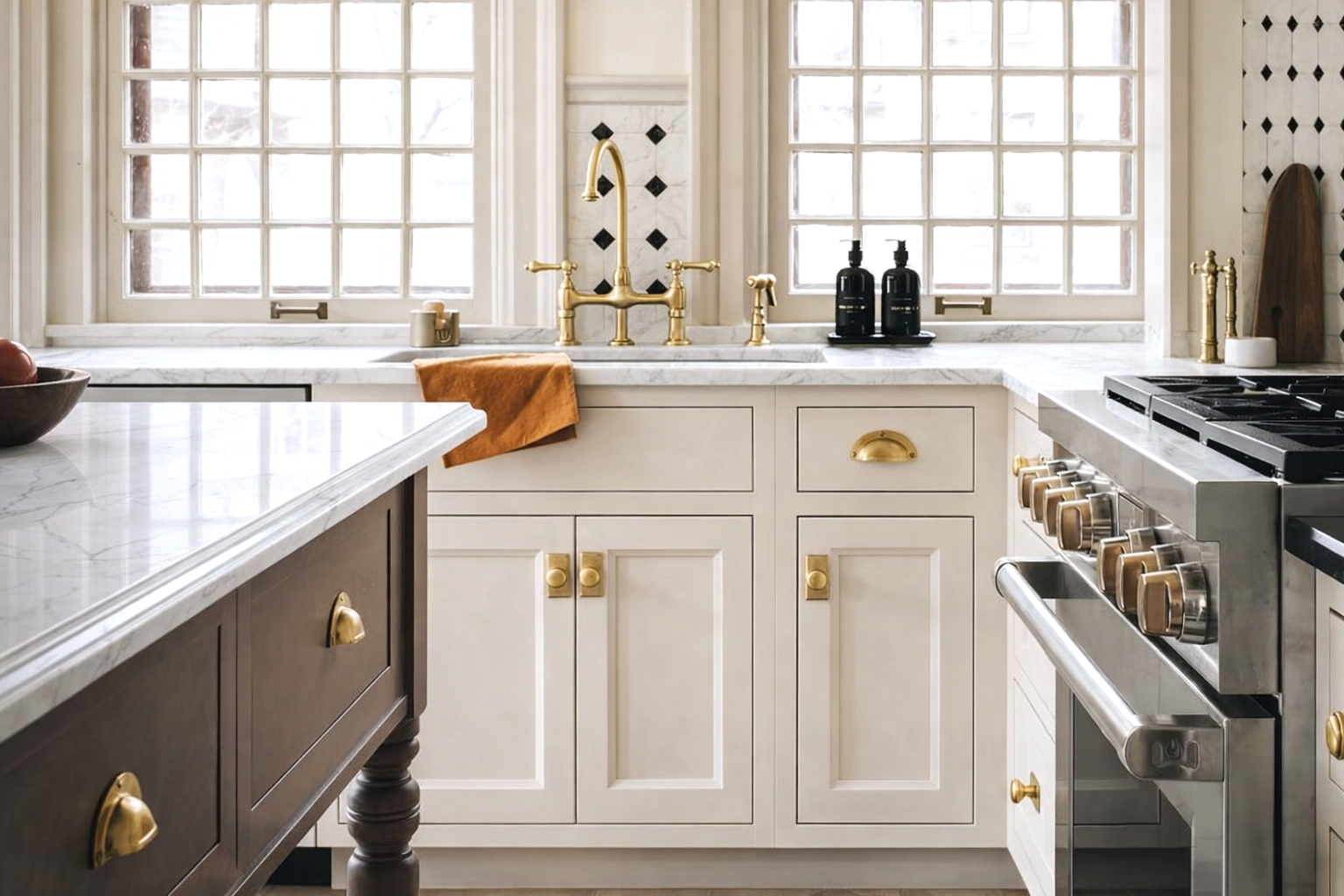
Design Begins with Discipline
Truly exceptional kitchens are not assembled—they are resolved. Long before materials are selected or finishes are applied, the foundation is established through discipline: proportion, alignment, and clarity of intent.
A well-designed kitchen resists the temptation to over-articulate. It does not rely on layers of competing details or decorative excess. Instead, it is guided by a quiet rigor—where every line has purpose, every junction is considered, and every element belongs. This level of restraint is what separates enduring design from the merely fashionable.
Proportion Over Decoration
The most overlooked—and most critical—element in kitchen design is proportion.
Cabinet heights, drawer divisions, panel widths, and appliance placement must relate to one another with precision. When proportion is correct, even the simplest cabinetry feels elevated. When it is not, no amount of embellishment can compensate.
This is particularly evident in inset cabinetry, where tolerances are unforgiving. Consistent reveals, balanced panel layouts, and disciplined symmetry create a sense of order that reads as effortless—but is anything but. It is the result of careful planning and exacting execution.
A Controlled Material Palette
A refined kitchen is not defined by how many materials it uses, but by how well they are edited.
Limiting the palette creates cohesion. One primary surface, one supporting material, and a considered accent are often all that is required. The goal is not variety, but hierarchy—allowing each material to play a clear and intentional role.
Natural materials remain the benchmark. Stone, wood, and metal bring depth, variation, and authenticity that synthetic alternatives struggle to replicate. Just as importantly, they age. A kitchen should not remain frozen in time; it should evolve, gaining character through use.
The Importance of Light
Light is one of the most powerful—and most misused—tools in kitchen design.
Natural light should be prioritized wherever possible, not simply for illumination, but for how it interacts with materials. Matte finishes absorb and soften it. Polished surfaces reflect and amplify it. The interplay between the two creates depth and balance.
Artificial lighting, meanwhile, should be layered with intention. Task lighting must be precise and functional. Ambient lighting should provide warmth without flattening the space. Accent lighting, used sparingly, can highlight architectural moments without overwhelming them.
The objective is not brightness, but clarity.
Function as a Design Driver
A kitchen that functions poorly cannot be considered well designed, regardless of its appearance.
Workflow must be intuitive. The relationship between preparation, cooking, and cleaning zones should feel natural and unforced. Distances matter—but so does sequence. A well-planned kitchen anticipates movement, reducing friction in everyday use.
Storage is equally critical. It should be accessible, logical, and integrated seamlessly into the architecture. Deep drawers often outperform traditional cupboards. Internal organization is as important as external appearance.
When function is resolved at a high level, the kitchen becomes not just efficient, but effortless.
Restraint in Detail
Detail is where many kitchens lose their way.
Hardware, edge profiles, moldings, and fixtures should be selected with restraint. Each additional decision introduces visual noise. The goal is not to eliminate detail, but to refine it—ensuring that each element contributes to a cohesive whole.
Consistency is key. Repeating finishes, aligning elements, and maintaining a clear visual language creates calm. Inconsistency, even in small moments, disrupts the entire composition.
Designing for Longevity
Trends are, by definition, temporary. Good kitchens are not.
Designing for longevity requires a shift in perspective—from what is current to what is correct. Neutral foundations, honest materials, and balanced compositions age far more gracefully than bold, trend-driven statements.
Equally important is adaptability. A well-designed kitchen allows for evolution—through patina, through subtle updates, and through the natural wear of daily life. It should feel better over time, not dated.
The Quiet Authority of Simplicity
There is a common misconception that luxury must be expressive. In reality, the most sophisticated kitchens are often the most restrained.
Simplicity, when executed with precision, carries a quiet authority. It allows proportion, material, and craftsmanship to take precedence over decoration. It creates spaces that feel calm, considered, and enduring.
This is the essence of timeless kitchen design—not the pursuit of attention, but the pursuit of balance.
→ Explore more Jolliffe’s kitchen editions where enduring design is shaped by discipline, not trend.